
Ricetta tratta dal libro Happy Hour di Franco Luise
fotografie di Stefania Sainaghi
Preparazione: 1 ora
Cottura: 10 minuti

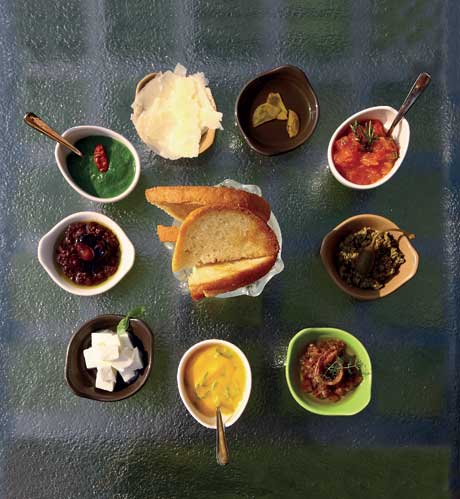
Ricetta tratta dal libro Happy Hour di Franco Luise
fotografie di Stefania Sainaghi
Preparazione: 1 ora
Cottura: 10 minuti

Recipe from Profumo di biscotti
Text and photos by Rossella Venezia
Preparation time: 15 minutes
Resting time: 30 minutes
Cooking time: 15-20 minutes
Ricetta tratta dal libro Profumo di biscotti
Testi e fotografie di Rossella Venezia
Preparazione: 15 minuti
Riposo: 30 minuti
Cottura: 15-20 minuti
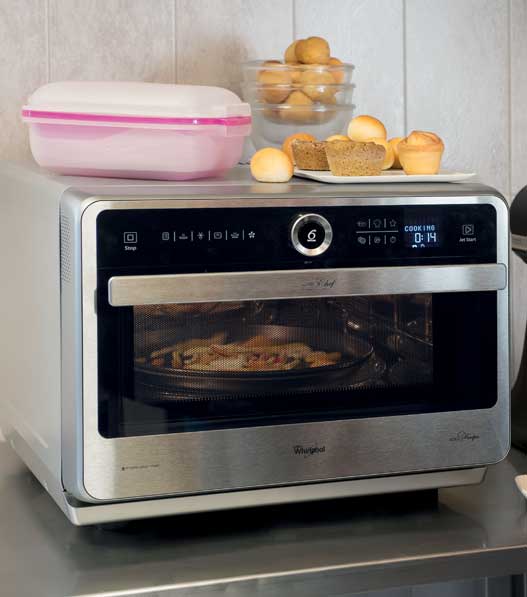
The genesis of the microwave oven can be traced to military research. It’s a classic story of “defense spending” that found a pacifistic, or in this case, a domestic application. Its evolution has as a rather singular “back to the future” story arc. Early models were conceived for the professional kitchen, research and development opened the way to domestic use and more recent models are being recognized as sophisticated cooking tools worthy of the appreciation of foodies and restaurant professionals.

Created nearly seventy years ago, the original microwave oven seems part of a distant technological past and it’s creation story has achieved a sort of mythic status. A young researcher named Percy Spencer was working on the realization of a magnetron, a generator of microwaves for use in radar equipment, when he realized that a chocolate bar in his pocket had melted completely. This incident led him to explore how microwaves reacted with other foodstuffs. From there the path to the first patent was relatively brief: it was awarded to Spencer in 1947.
The first microwave oven, much like the first mainframe computer, was a behemoth weighing in at over 300 kg and at three thousand dollars it was certainly expensive. Given these characteristics it could hardly be thought of as a domestic cooking tool. The first chefs to make extensive use of the invention were those with the logistical problem of serving many diners simultaneously in a relatively short period of time. In the 1950s the first microwave ovens were used on cruise ships and in the first class restaurants of long-distance trains and in certain large hotels in the United States.
It would take roughly another decade for the microwave oven to assume truly domestic proportions. In the mid sixties the first model destined for home use was exhibited at a Chicago trade fair. Though still quite large and priced for an elite market, it didn’t take long for a number of industrialists to realize the potential of the technology. In the space of a few years the design was streamlined becoming lighter, esthetically pleasing and more adapted to the space restrictions of the home kitchen.
“User friendly” from the start, the microwave oven soon became the faithful companion of students, singles and hassled housewives concerned with saving time. These categories of users treated it largely as a tool for avoiding cooking, employing it to regenerate pre-cooked frozen food or to reheat takeaway. The greater its inroads in the domestic market (95% of U.S. households contain a microwave oven; 75% in Europe) or the “convenience” market, the more professional cooks tended to keep their distance. For quite a long time the microwave oven was the sad denizen of Italian bars and tavole calde, where its domestic (mis)use as a regenerator of previously cooked food was replicated on countless portions of pasta, meat and fish.
The foresight of a select group of producers like Whirlpool has enabled the technology to come full circle, regaining relevance for professional chefs and passionate cooks interested in experimenting new cooking techniques and preparations. Recent models are fully able to substitute for other cooking tools and may be used with the full range of foodstuffs.

The microwave oven 2.0 is no longer the regenerator of poorly prepared meals. Rather, it’s an indispensable tool for preparing fine food quickly. One need no longer search for recipes ‘adaptable’ to microwave cooking since the device has embraced the whole range of preparations: sweet and savory, traditional and innovative. For those who demand proof we suggest trying the recipes from: Facile, pratico, veloce Microonde! by Stefano Masanti or Cioccolato facile e veloce con il microonde by Denis Buosi.
L’ideazione del forno a microonde è una di quelle classiche storie di invenzioni nate per uno scopo militare, che nel tempo hanno trovato un’applicazione più pacifista e in questo caso anche più “domestica”. Costituisce anche un singolare caso di “ritorno al futuro” in quanto l’uso culinario iniziale era destinato esclusivamente al mondo professionale, dopo aver attraversato molte fasi ed essere approdato in tutte le case in versione sempre più ridotta e semplificata, recentemente il forno a microonde è tornato ad essere concepito come uno strumento di cottura sofisticato adatto agli appassionati di cucina e ai professionisti della ristorazione.
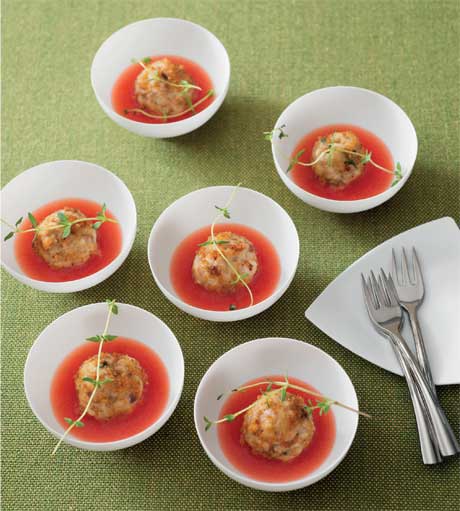
Recipe from Finger food in festa by Dennis Buosi
Photography – Francesca Moscheni
Preparation time: 40 minutes
Cooking time: 10 minutes
Ricetta tratta dal libro Finger food in festa di Dennis Buosi
Fotografie di Francesca Moscheni
Preparazione: 40 minuti
Cottura: 10 minuti

A useful tool for the traveling chef who must reduce his tool kit to a minimum or for any cook who appreciates the importance of careful temperature monitoring, Range transforms an iPhone or iPad into a thermometer. A silicone cable connects the probe to the audio port of your device and a free app makes all of the data visible and accessible on its screen.